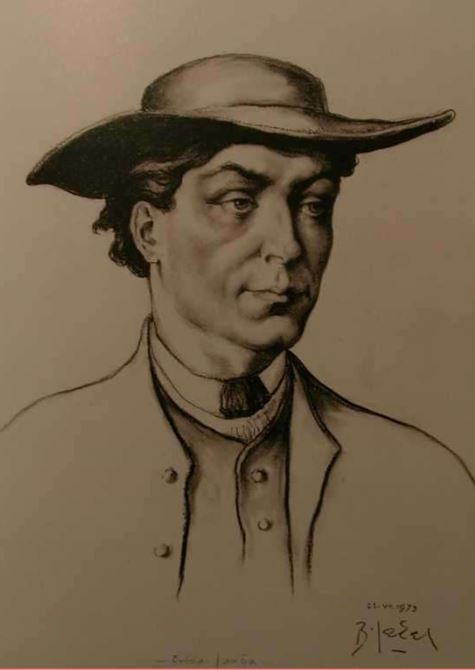
When Nikola Tesla arrived in New York in 1884, he listed his nationality as Serbian. That was the fact. The church records confirmed it. His language confirmed it. The Orthodox faith confirmed it. However, as an American-Serbian scientist, he also belonged to many other ethnicities.
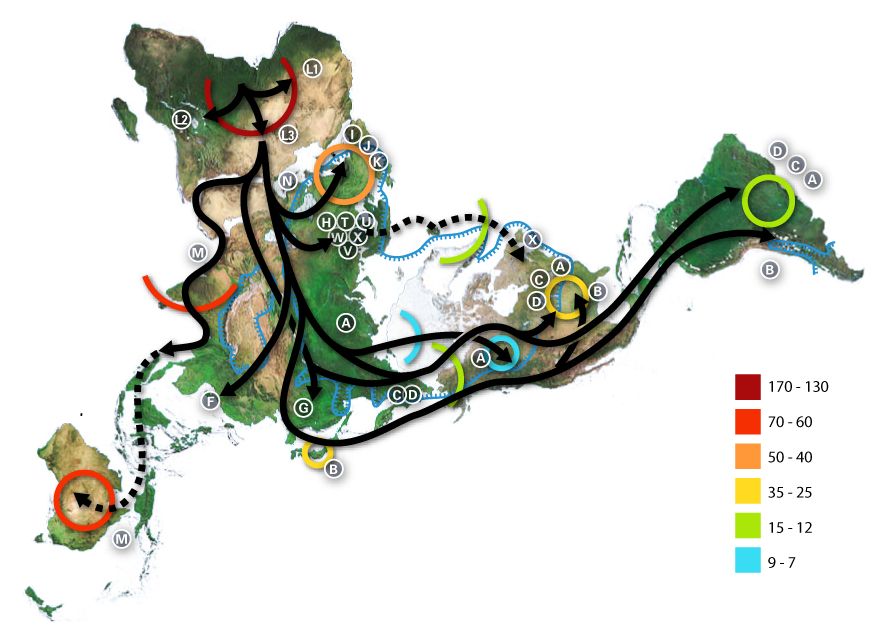
It is well known that Nikola was born on July 10, 1856, in the village of Smiljan in Lika, now Croatia. This was an ancient origin of the maternal side of the family, continued in the Dinaric Alps from a period far before the Slavic settlers arrived to Balkan.
This was revealed in 2019, when genetic researchers working in collaboration with Balkan Genealogical Archives began a systematic study of historical figures using modern genetic tools to trace the deep ancestry of families whose written records had run out. See what DNA revealed about Nikola Tesla’s ancestry.
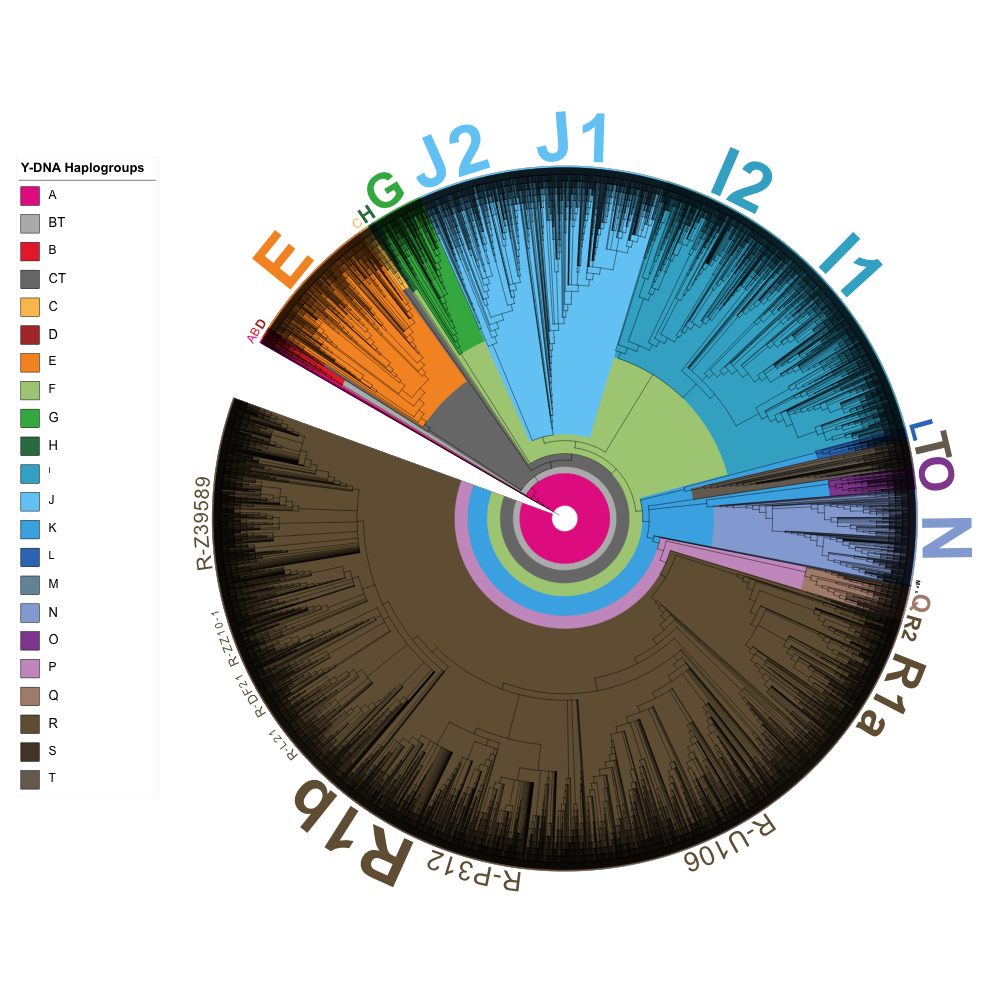
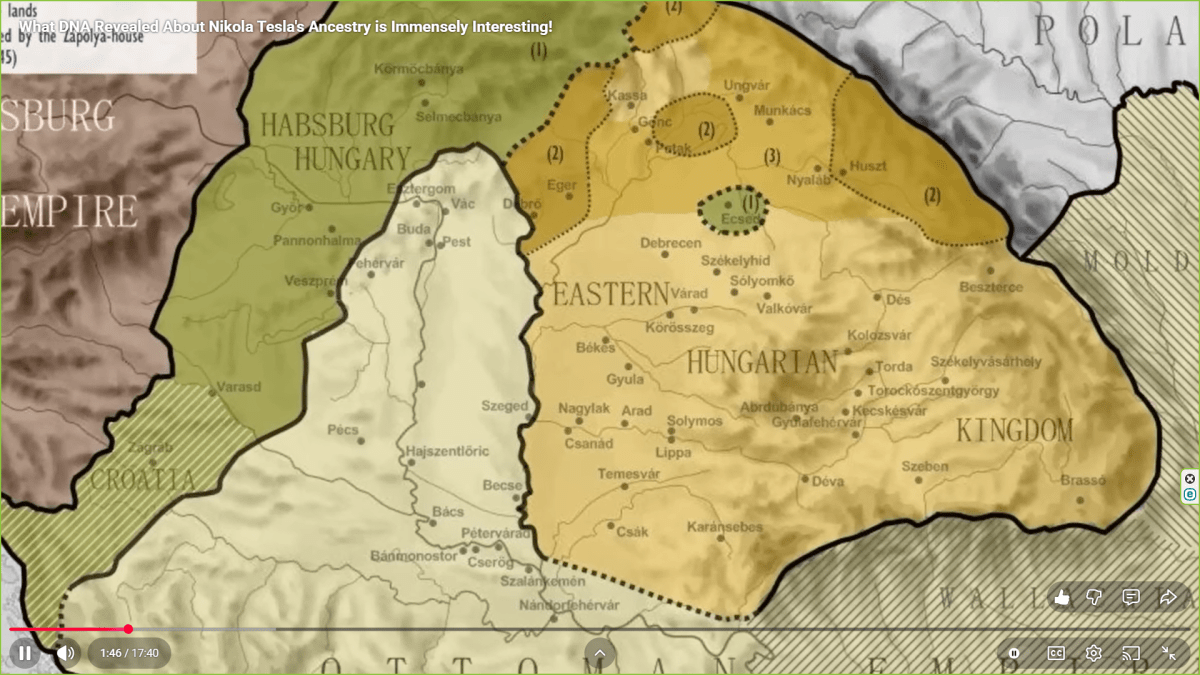
Also, for the paternal line, it was established that it may not belong to the Slavic haplogroups. The markers pointed further east to a more recent divergence point, a profile that aligned more closely with populations associated with the Vlach diaspora. At least the latest probabilistic data-mining DNA study claims it so.
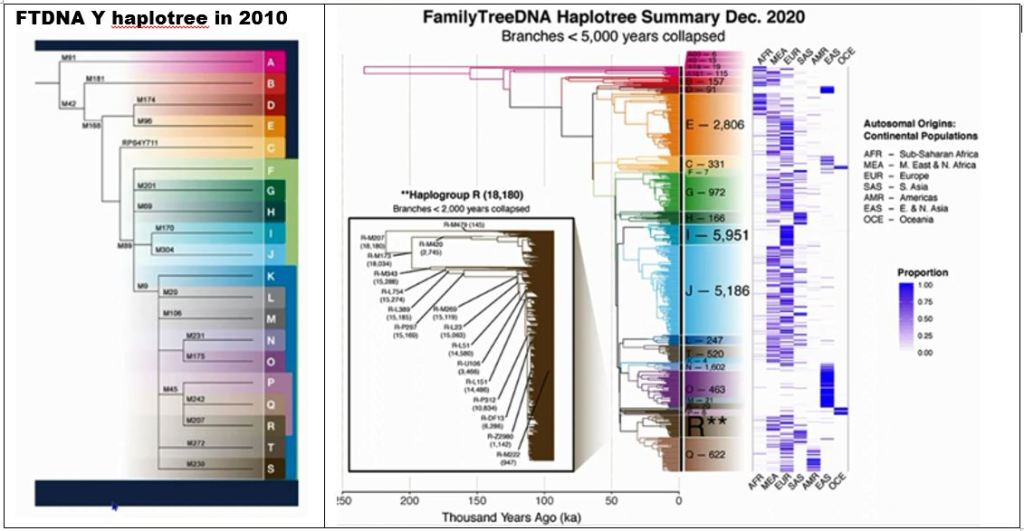
Namely, the first tested Tesla with haplogroup I2a is most likely the descendant of a man who entered Tesla and got the last name of Tesla through the female line. The man’s surname was Kalinic.
The second tested Tesla’s line belongs to the Eastern Europe haplogroup R1a-M458. He was a direct descendant of Nikola Tesla grandfather’s brother. Which one is correct? The direct testing of DNA in Nikola’s remains is not possible. He died and was cremated in the USA. His ashes was transffered to Belgrade, to the Museum of Nikola Tesla, where an urn is still today.
Who are Vlachs?
The Vlachs were not a marginal group. They were one of the most widespread and least understood peoples in medieval European history. Semi-nomadic in lifestyle, Latin language speaking. Their tongue was a Romance language related to Romanian, descended from the Latin of Roman provincial populations in the Balkans and Eastern Orthodox in faith.
Vlach communities had moved through the Carpathian and Danubian corridors across the medieval period and gradually resettled throughout the Balkans as Ottoman disruption reshuffled the population map of southeastern Europe. Ethnically distinct yet deeply integrated with the communities around them. They moved with livestock across seasonal grazing routes, traded across long distances, and maintained their own customs and social structures for centuries. Byzantine chronicles mentioned them. Medieval Serbian legal codes referenced them. Ottoman administrators recorded their movements.
Over centuries, they became expert navigators of political and cultural change, surviving Ottoman conquest, Habsburg administration, and repeated demographic reshuffling by doing what mobile populations have always done when empires close in. Over time, in community after community, Vlach families intermarried with their neighbors, adopted local languages, aligned with local religious institutions, and gradually stopped marking themselves as separate. The assimilation in many cases was complete within two or three generations.
What the Vlachs left behind was not a paper trail. It was a genetic one. The Tesla paternal haplogroup markers fit the genetic profile of populations that followed exactly this trajectory. A family that entered the military frontier zone carrying Vlach patrilineal ancestry, integrated into Serbian Orthodox community life across several generations, adopted the Serbian language and identity fully, and by the mid 1800s had produced a priest, Nicola’s grandfather, a man whose entire public role was the embodiment of Serbian Orthodox religious and cultural tradition.
Family of Nikola Tesla
His close family is documented on Geneanet as shown below.

Nikola was the son of an Orthodox priest, Milutin Tesla, and Georgina Duka Mandić, a priest’s daughter from a well-known Lika family. Nikola was named by both grandfathers. He himself documented that he was born at exactly midnight during a lightning storm. What a sign for a later inventor, electrical engineer, and futurist, best known for his contributions to the design of the modern alternating current electricity supply system.
He attended a four-year primary school in his native village, followed by a three-year lower secondary school in Gospić. Then he attended a three-year higher secondary school in Karlovac (now Croatia). He graduated on July 24, 1873, in a group of only seven students. In 1875, he enrolled at the Austrian Technical University in Graz and began studying electrical engineering. With support from home and a state scholarship, he was able to study abroad. When the scholarship ran out, he interrupted his studies in 1878. In 1879, he got his first job in Maribor (now in Slovenia). In the same year, his father died. This encouraged him to continue his studies in Praga (now in Chechia) and to stop indulging in cards and gambling. He also lived in Budapest (Hungary) and Paris (France). In 1884, he emigrated to the United States of America with his last savings.
The Memorial Center in Smiljan, Croatia, is located at the birthplace of Nikola Tesla. It was opened to the public on the 100th anniversary of Tesla’s birthday in 1956. The museum was damaged during the Croatian War of Independence when a projectile fell on the commercial building next to Nikola Tesla’s house. The museum was reopened on 10 July 2006, on the 150th anniversary of Tesla’s birthday, by the President of the Republic of Croatia in the presence of the highest dignitaries of Croatia and Serbia attending the ceremony.
Conclusion
Haplogroup analysis is probabilistic by nature. The markers identify probable population affiliations, not certain ones. Distributions overlap across populations in ways that complicate clean conclusions. The findings of the genetic origin of Nikola Tesla have not yet been published in a peer-reviewed journal. Ongoing analysis is continuing, and the scientists state these caveats clearly. They are not claiming certainty. They are presenting a statistically significant divergence from expected results, a coherent historical framework that accounts for it, and an open question that further research may eventually resolve. (Past Decoded)